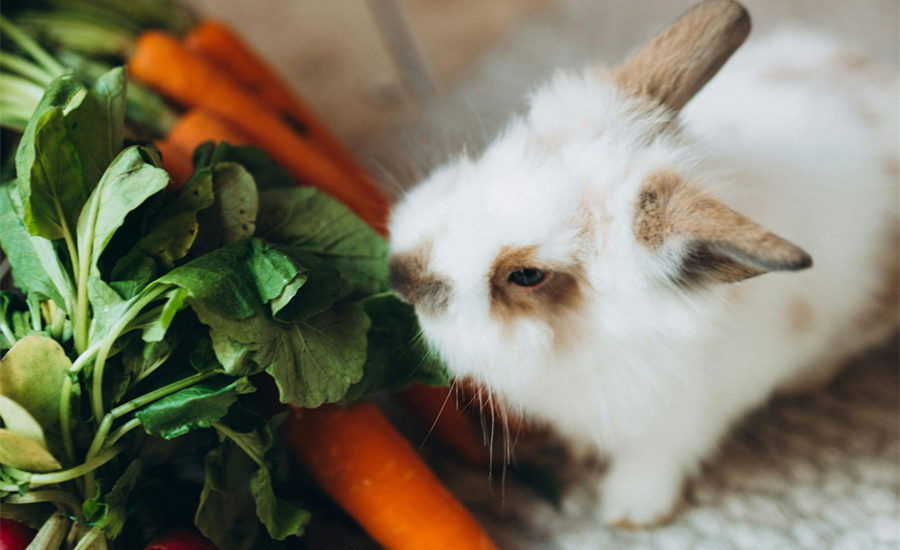
Seeing a rabbit nibble something meaty can be startling. Most people know rabbits as plant eaters, so the moment feels strange and a little worrying. The short answer is that rabbits are herbivores, and meat should not be part of their normal diet. Still, odd one-off behavior can happen, and it does not change what a rabbit’s body is designed to eat.
Do Rabbits Eat Meat?
Rabbits are herbivores, so meat should not be part of their usual diet. Their bodies are designed around plant-based foods, especially fiber-rich foods like hay and grass. If you are looking for the clearest possible answer, that is it: rabbits should not be fed meat.
The confusion usually starts when an owner sees something unexpected. A rabbit may mouth animal-based food out of curiosity, or snatch a tiny piece before anyone notices. That kind of moment can happen, but it is still outside a healthy feeding routine. A strange bite is not the same thing as a suitable food.
That distinction matters because readers searching this keyword are often trying to interpret one surprising incident. The real answer is less dramatic than it feels in the moment. Rabbits may occasionally do odd things, but their nutritional needs are still very straightforward.
Why Rabbits Are Considered Herbivores
Rabbits are considered herbivores because their digestive system depends on plant material, especially fiber. A healthy rabbit diet is built around hay or grass, with fresh leafy greens and a measured amount of pellets supporting that base. That is the pattern rabbit owners should keep coming back to.
This matters for more than digestion alone. Rabbits also rely on the right foods to help wear down their constantly growing teeth. In other words, their daily food is doing several jobs at once. It helps support gut movement, dental health, and overall routine. Meat does not fit into that system in any useful way.
It also helps to separate biology from behavior. Animals do not always make perfect food choices. A rabbit chewing something inappropriate does not mean its body is built for that food. It simply means the rabbit had access to something unusual and reacted in the moment.
Can Rabbits Digest Meat Well?
Rabbits are not built to thrive on meat, which is why it should never be offered as a normal part of the diet. Their digestive system works best when it is supported by consistent, fiber-rich foods rather than rich or inappropriate extras.
That is why meat is not a clever “protein boost” and not a treat worth testing. Rabbit nutrition is not improved by adding foods that fall outside their natural dietary pattern. In practice, the healthiest rabbit diet is usually a simple one: plenty of hay, fresh water, suitable greens, and a sensible amount of pellets.
If a rabbit once licked grease or grabbed a tiny bite of something meaty, that does not automatically mean a medical emergency. It does mean the food was inappropriate, and it is a reminder to return to the basics rather than brush the moment off as normal.
What Rabbits Should Eat Instead
Hay and Grass as the Foundation
Hay should be the center of a rabbit’s daily diet. It is not just filler, and it is not just bedding. Hay helps keep digestion moving properly and supports dental wear in a way rabbits genuinely need every day.
Fresh grass can also be an excellent part of the diet when introduced carefully and safely. Together, hay and grass create the kind of steady, high-fiber routine rabbits are built for. When that foundation is strong, everything else becomes easier to manage.
Fresh Greens in the Right Amounts
Fresh leafy greens bring variety and freshness to a rabbit’s meals, but they still play a supporting role rather than replacing hay. They work best as part of a balanced daily routine, not as the entire menu.
This section is important because owners sometimes mistake variety for nutritional improvement. Rabbits do benefit from safe plant variety, but that variety should still stay within rabbit-appropriate foods. In other words, if you want to make meals more interesting, reach for safe greens rather than unusual household scraps.
Pellets and Treats in Moderation
Pellets can help round out the diet, but they should stay limited rather than taking over the bowl. Treats should be occasional and modest too. Once owners move too far away from the hay-first approach, it becomes easier for the whole routine to slip out of balance.
That is often where confusing moments begin. When a rabbit is surrounded by rich treats, random scraps, or food meant for people, it becomes harder to tell the difference between curiosity and a feeding problem. A clean, predictable routine makes unusual behavior easier to spot and easier to manage.
Signs Your Rabbit’s Diet May Need Attention
Sometimes a rabbit taking interest in an inappropriate food is just a weird one-time moment. Other times, it is worth stepping back and looking at the overall feeding setup. If your rabbit seems unusually fixated on random foods, the bigger routine may need a closer look.
Start with the basics. Does your rabbit always have access to hay? Are greens and pellets being offered in a balanced way? Are sugary treats or household foods showing up too often? Is your rabbit bored, understimulated, or spending time in a space where unsafe food is easy to reach?
Rabbits are naturally curious, and curiosity can easily blur into trouble when tempting smells and textures are nearby. A rabbit that steals an odd bite is not necessarily asking for meat. More often, it is exploring whatever happened to be within reach.
That is why the feeding environment matters almost as much as the menu itself. A tidy setup, steady access to hay, and a clear routine can reduce random nibbling and help owners feel more confident about what is normal.
FAQ
What happens if a rabbit eats a small piece of meat?
A tiny accidental bite is different from intentionally feeding meat. In many cases, the most practical response is to remove the food, keep an eye on your rabbit, and make sure normal hay and water are available. If your rabbit seems uncomfortable, stops eating, produces unusual droppings, or behaves differently afterward, it is best to check in with a rabbit-savvy vet.
What should you do if your rabbit ate meat?
Start by staying calm and taking the food away so your rabbit cannot keep eating it. Then watch for changes in appetite, droppings, energy, or general behavior. Offer your rabbit its usual hay and water, and avoid making sudden changes to the rest of the diet. If the amount was more than tiny, the food was rich or heavily seasoned, or your rabbit seems unwell, contact a rabbit-experienced veterinarian for advice.
Do rabbits eat bugs?
Sometimes a rabbit may snap at or mouth a bug, usually out of curiosity or by accident. That can happen without meaning insects are an important or necessary part of the diet. It is better understood as unusual behavior than as a nutritional need.
Are rabbits omnivores?
No. Rabbits are herbivores. That classification reflects the kind of diet their bodies are designed to handle well over time. A strange bite here and there does not change that basic fact.
Why did my rabbit try to eat something meaty?
Usually because rabbits explore with their mouths. Smell, texture, and simple opportunity can all lead to odd food behavior. A rabbit may investigate something meaty for the same reason it chews cardboard or noses into a shopping bag: it is curious, not because the food belongs in its diet.
Should I give my rabbit meat for extra protein?
No. Rabbits do not need meat for extra protein, and it is not a healthy way to support their nutrition. A balanced rabbit diet should stay centered on fiber-rich plant foods, especially hay. If you are unsure whether your rabbit’s current diet is meeting its needs, it is far better to review the feeding routine than to experiment with foods that do not belong there.