Some food names are funny before the plate even arrives. They sound exaggerated, oddly dramatic, or completely invented, and that surprise is part of the appeal. A dish like spotted dick or toad in the hole instantly makes people stop and ask questions.
That is what makes funny food names so enjoyable. They are not just jokes. They are real dishes shaped by local language, old traditions, and the kind of naming logic that made perfect sense somewhere, sometime, to someone. Once you know what they actually are, the names usually become even more memorable.
15 Funny Food Names That Are Actually Real
Spotted Dick
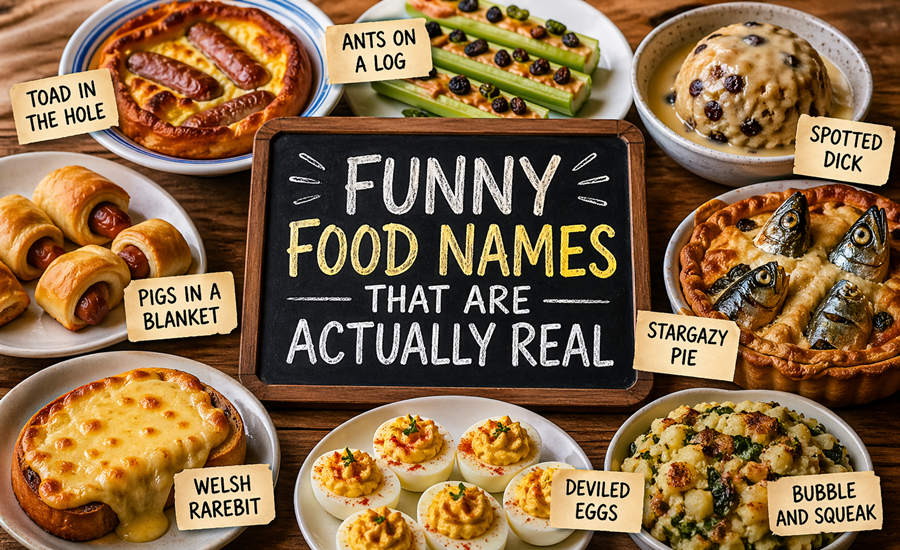
Spotted dick is a traditional British steamed pudding made with suet and dried fruit, usually currants or raisins, and it is often served with custard. The “spotted” part refers to the fruit scattered through the pudding. The name is what grabs attention now, but the dish itself is old-school comfort food rather than anything intentionally outrageous.
Toad in the Hole
Toad in the hole is a British dish of sausages baked in batter until the top turns puffed and golden. It sounds far stranger than it is, which is exactly why the name has lasted. On the plate, it is hearty and familiar. On paper, it sounds like something pulled from a storybook.
Bubble and Squeak
Bubble and squeak is usually made by frying potatoes and cabbage together, often with other leftover vegetables. The name is commonly linked to the sounds the ingredients make in the pan, which gives the dish an extra bit of character. It turns a practical leftovers meal into something lively, specific, and easy to remember.
Stargazy Pie
Stargazy pie is a Cornish fish pie known for the way whole fish heads are arranged to poke through the crust. That dramatic presentation is the reason the name lands so well. It does not just sound unusual. It looks unusual too. Even people who know the dish tend to remember it first for the image it creates.
Welsh Rarebit
Welsh rarebit is toasted bread topped with a rich savory cheese sauce, often flavored with mustard, ale, or Worcestershire sauce. The funny part is the quiet misdirection in the name. It sounds as if it should involve rabbit, but it does not. That small mismatch makes an otherwise cozy dish feel much more distinctive.
Deviled Eggs
Deviled eggs are hard-boiled eggs filled with a seasoned yolk mixture, usually made with ingredients like mustard, mayonnaise, vinegar, and spices. The word “deviled” comes from older culinary language for foods that were strongly seasoned or spicy. That gives a simple party dish a much sharper, more dramatic name than its appearance suggests.
Pigs in a Blanket
Pigs in a blanket usually means small sausages or hot dogs wrapped in dough and baked. The name works because it is visual and a little ridiculous in a very harmless way. It makes the food sound cozy, playful, and casual, which fits its role as a party snack or easy comfort food.
Ants on a Log
Ants on a log is the classic snack made with celery, a spread such as peanut butter, and raisins on top. The raisins become the “ants,” the celery becomes the “log,” and suddenly a very ordinary snack has a name children actually remember. It is one of the clearest examples of a funny food name doing real work.
Hushpuppies
Hushpuppies are deep-fried balls of cornmeal batter, usually served as a side with Southern seafood and other fried dishes. The exact story behind the name is debated, but the phrase itself has lasted because it sounds warm, regional, and full of personality. Even people who have eaten them for years often pause at the name.
Head Cheese
Head cheese is not cheese at all. It is a meat preparation traditionally made from parts of an animal’s head and set into a loaf or terrine. The humor comes from the disconnect between the name and what arrives on the plate. It sounds dairy-based, but the reality is much more old-world and savory.
Sloppy Joe
A sloppy joe is a sandwich made with ground beef cooked in a thick seasoned sauce and served on a bun. The name suits it perfectly because neatness is not part of the experience. It is messy, casual, and built to spill a little. That plainspoken name captures the whole mood of the dish in two words.
Monkey Bread
Monkey bread is a sweet pull-apart bread made from small pieces of dough baked together with butter, cinnamon, and sugar. It is meant to be torn apart by hand, which gives it a playful feel from the start. The exact origin of the name is not settled, but its slightly chaotic energy matches the way the bread is eaten.
Shoofly Pie
Shoofly pie is a Pennsylvania Dutch dessert with a molasses filling and crumb topping, often baked in either a wetter or drier style. The name sounds almost musical, which helps explain why people remember it so easily. It has the kind of old regional charm that makes the dessert feel vivid before you even take a bite.
Dogs in Blankets
Dogs in blankets follows the same playful naming pattern as pigs in a blanket. In the UK, it commonly refers to small sausages wrapped in bacon, especially around the holidays. The dish is simple, but the name gives it instant charm. It feels like festive comfort food that never takes itself too seriously.
Garbage Plate
The Garbage Plate is a Rochester, New York specialty built around a pileup of hearty components such as meat, potatoes, macaroni salad, sauces, and toppings on one plate. The name is blunt, messy, and unforgettable. It does not promise elegance. It promises quantity, comfort, and the kind of meal people talk about afterward.
Funny Food Names From Around the World
One reason this topic never gets old is that funny food names are not limited to one place. They show up wherever food culture and local language have had time to grow together. What sounds bizarre to an outsider can sound perfectly ordinary to the people who grew up with it.
British food names get a lot of attention because many of them sound especially strange to modern readers, but the broader pattern is much more universal. Regional cooking often names dishes after sounds, shapes, animals, household objects, or bits of folklore. Once those names settle into daily use, they stop sounding unusual to locals and start sounding like home.
That is also why these names are more interesting than they first appear. They are not random. They usually carry a clue about how a dish looks, how it cooks, what it contains, or the world it came from. The humor is real, but so is the cultural history behind it.
Why Weird Food Names Are So Memorable
Weird food names last because they create an immediate picture. Bubble and squeak sounds noisy. Ants on a log looks exactly like its name. Garbage plate tells you, very directly, that neat presentation is not the point. These names do more than label a dish. They give it personality.
They also make food easier to share. A plain descriptive title might tell you what is in a dish, but a strange or playful one gives people something to repeat. That is part of why lists like this spread so easily. The names are surprising enough to start a conversation, even before anyone gets into taste or history.
Most of all, funny food names remind us that food culture is built from more than recipes. It is shaped by humor, habit, memory, and regional identity. A name that seems ridiculous at first often turns out to be a small piece of local character that survived because people liked saying it.