Viking female names have a kind of presence that is hard to ignore. Some feel regal, some feel fierce, and some carry a softer beauty that still feels grounded and strong. Whether you are looking for a baby name, a character name, or simply exploring names with Old Norse roots, this guide brings together meaningful options with just enough context to help you choose well.
What Makes a Name Feel Viking or Norse?
Viking female names usually trace back to the Old Norse world, but that does not always mean every name comes directly from the Viking Age itself. Some were used historically, some come from Norse mythology and saga tradition, and some are later Scandinavian forms that still carry the same distinctive feel.
What ties them together is the mood they create. These names often sound strong, lyrical, symbolic, or a little legendary. That is part of why they still stand out today. Even when the roots vary, they tend to share the same sense of depth, character, and northern history that people are usually looking for.
Viking Female Names and Meanings
If this is the section you came for, you are probably not alone. Most readers want more than a quick list. They want to know what a name means, what kind of feeling it carries, and whether it sounds more warrior-like, elegant, mystical, or timeless. That is what makes a name easier to picture in real life.
Freya
Freya is one of the most beloved Norse-inspired girl names, and it is easy to see why. It feels feminine and luminous, but it also carries real power. The name comes from Freyja, the Norse goddess associated with love, fertility, battle, and death, which gives it far more depth than a pretty sound alone.
- Meaning: Usually understood as “lady.”
- Feel: Graceful, radiant, powerful.
- Why it stands out: It feels easy to use today while still holding strong mythological roots.
Astrid
Astrid has a bright, elegant sound that still feels substantial. It comes from the Old Norse Ástríðr and is often explained through elements tied to divinity and beauty. The result is a name that feels polished and classic rather than overly dramatic.
- Meaning: Often interpreted as “divinely beautiful.”
- Feel: Regal, refined, quietly strong.
- Why it stands out: It works beautifully in modern life without losing its old-world character.
Sigrid
Sigrid is bold in a very steady, elegant way. It comes from the Old Norse Sigríðr and combines elements linked to victory and beauty or belovedness. It has presence without feeling heavy, which makes it an especially appealing choice for readers who want strength with polish.
- Meaning: Commonly linked to “victory” and “beautiful” or “beloved.”
- Feel: Noble, composed, powerful.
- Why it stands out: It sounds confident without trying too hard.
Ingrid
Ingrid is one of the easiest Viking-inspired names to picture in everyday use. It comes from the Old Norse Ingríðr and is usually interpreted as “Ing is beautiful,” connecting it to the old Germanic god Ing. Compared with more dramatic saga-style names, Ingrid feels smooth, intelligent, and timeless.
- Meaning: Usually explained as “Ing is beautiful.”
- Feel: Classic, graceful, grounded.
- Why it stands out: It feels strong without sounding severe.
Lagertha
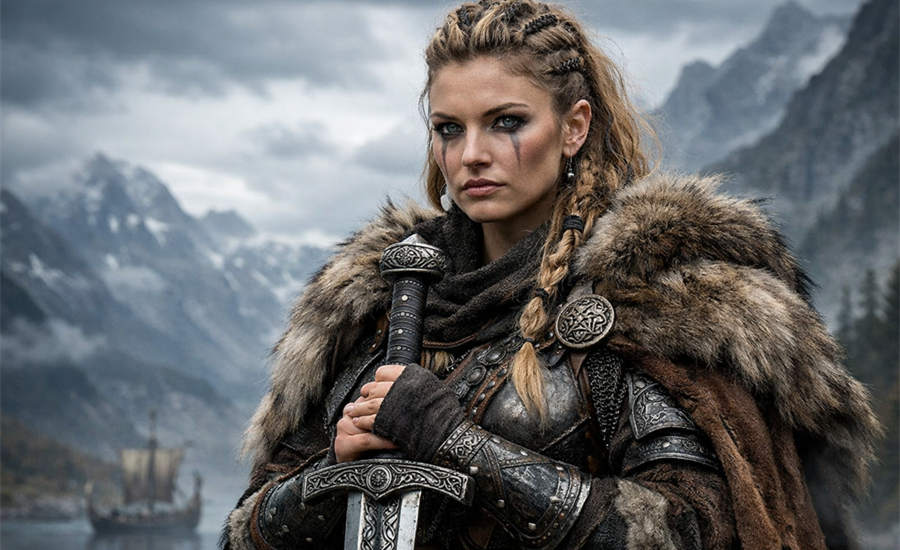
Lagertha is one of the most searched female Viking names because it instantly suggests a shield-maiden image. It is better understood as a legendary or literary name than a simple, firmly historical given name, but its appeal is still obvious. It feels fierce, memorable, and larger than life.
- Meaning: Better known through legend than through a straightforward name meaning.
- Feel: Warrior-like, dramatic, fearless.
- Why it stands out: It has a strong mythic and pop-cultural presence.
Gudrun
Gudrun is rich with saga atmosphere. It comes from Guðrún and is commonly explained as “god’s secret lore.” That gives the name a deep, serious quality that feels more story-filled than decorative. It is a strong choice for readers who want substance and history.
- Meaning: Often given as “god’s secret lore.”
- Feel: Wise, intense, story-rich.
- Why it stands out: It carries real emotional and literary weight.
Helga
Helga has a calm, sturdy beauty that feels very grounded. It is the feminine form of Helge and comes from a root meaning “holy” or “blessed.” It may feel more traditional than trendy, but that is part of what gives it substance.
- Meaning: Connected to “holy” or “blessed.”
- Feel: Solid, traditional, quietly beautiful.
- Why it stands out: It feels sincere and historically rooted.
Runa
Runa is short, distinctive, and full of atmosphere. It is tied to the Old Norse word for secret lore or rune, which gives it a mystical quality without making it sound too ornate. It feels modern on the page, but its symbolism is ancient.
- Meaning: Linked to “secret lore,” “mystery,” or “rune.”
- Feel: Mystical, thoughtful, sleek.
- Why it stands out: It is simple, memorable, and symbolic.
Brynhild
Brynhild is one of the clearest warrior names in this group. It is tied to armor and battle, and in Norse legend Brynhildr is a valkyrie figure with enormous dramatic weight. This is not a soft or subtle name, which is exactly why it appeals to some readers.
- Meaning: Connected to armor and battle.
- Feel: Heroic, fierce, legendary.
- Why it stands out: It has unmistakable warrior energy.
Sif
Sif is short, elegant, and easy to remember. In Norse mythology, Sif is Thor’s wife, and the name is traditionally linked to meanings like “bride” or “kinswoman.” Because it is so compact, it feels especially clean and modern while still having very old roots.
- Meaning: Traditionally linked to “bride” or “kinswoman.”
- Feel: Minimal, mythic, elegant.
- Why it stands out: It is simple, beautiful, and full of mythological character.
Thyra
Thyra has a noble, composed sound that makes it feel quietly powerful. It is related to older Norse forms such as Þýri, though its exact path and meaning are often treated more cautiously than some other names on this list. That makes it a good name to choose for tone as much as etymology.
- Meaning: Rooted in older Norse naming traditions, though often explained with some caution.
- Feel: Regal, poised, feminine.
- Why it stands out: It sounds graceful without feeling fragile.
Eira
Eira is soft, lyrical, and one of the gentler names in this group. In Scandinavian use, it is treated as a modern form of Eir, a Norse name meaning “mercy” and associated with healing. That gives Eira a lighter kind of strength that feels calm rather than fierce.
- Meaning: Connected to mercy and healing through Eir.
- Feel: Gentle, airy, restorative.
- Why it stands out: It offers a softer kind of Norse-inspired beauty.
Yrsa
Yrsa is rare, earthy, and memorable. Its meaning is uncertain, though it is sometimes associated with a she-bear image in modern discussions. Even without a fully settled meaning, the name has a wild, instinctive strength that stands apart from smoother, more polished choices.
- Meaning: Uncertain, though sometimes linked to a she-bear association.
- Feel: Earthy, rare, quietly fierce.
- Why it stands out: It feels unusual without losing its Nordic character.
Solveig
Solveig has a graceful sound, but there is real strength underneath it. It comes from an Old Norse name often interpreted through elements meaning “sun” and “strength.” That makes it feel warm, luminous, and grounded all at once.
- Meaning: Commonly linked to “sun” and “strength.”
- Feel: Warm, soulful, elegant.
- Why it stands out: It sounds beautiful without feeling delicate.
Gunnhild
Gunnhild is a powerful old Norse name with unmistakable battle energy. Its roots connect it to war and battle, which makes it one of the strongest true warrior-style names here. It feels heavier than modern favorites like Freya or Ingrid, but that weight is part of its appeal.
- Meaning: Connected to war and battle.
- Feel: Commanding, fierce, traditional.
- Why it stands out: It sounds serious, strong, and unmistakably old-world.
Alfhild
Alfhild brings together mythic softness and warrior undertones. It comes from elements meaning “elf” and “battle,” which gives it a more enchanted feeling than many names on this list. In Scandinavian legend, Alfhild is also linked to a maiden who disguises herself as a warrior.
- Meaning: Commonly explained through “elf” and “battle.”
- Feel: Rare, mythic, slightly magical.
- Why it stands out: It blends fantasy-like beauty with strength.
Signy
Signy is compact, elegant, and full of saga character. It comes from an Old Norse name derived from elements meaning “victory” and “new.” The sound is neat and refined, but there is real intensity underneath it, especially in its mythological associations.
- Meaning: Traditionally linked to “victory” and “new.”
- Feel: Sharp, poised, memorable.
- Why it stands out: It is short, unusual, and rich with old-story atmosphere.
Aslaug
Aslaug feels unmistakably legendary. It is derived from Old Norse elements tied to “god” and an element often understood as “vowed,” “promised,” or “bound in oath.” That gives it a noble, dramatic quality that feels deeply connected to saga tradition.
- Meaning: Often explained through “god” and an oath-related element.
- Feel: Noble, dramatic, ancient.
- Why it stands out: It has a strong mythic presence and a memorable sound.
Ragnhild
Ragnhild is weighty in the best way. It comes from elements associated with counsel and battle, which gives it both wisdom and strength. Compared with names that feel softer or more lyrical, Ragnhild has a more stately, authoritative tone.
- Meaning: Connected to “counsel” and “battle.”
- Feel: Royal, grounded, powerful.
- Why it stands out: It suggests intelligence as much as strength.
The Different Styles of Viking Female Names
One reason this category stays so appealing is that it is not one-note. Some names feel fierce and martial. Others feel graceful, luminous, or deeply mythological. Looking at them by style can make the right choice easier to spot.
Strong and Warrior-Like Names
Brynhild, Gunnhild, Lagertha, Ragnhild, and Alfhild all lean toward a bolder, more commanding energy. These are the names readers usually notice first when they want something fierce and unforgettable.
Soft and Elegant Norse Names
If you want something gentler, Freya, Astrid, Ingrid, Eira, and Solveig offer a softer beauty. They still feel substantial, but they carry their strength in a more graceful way.
Rare Viking Female Names
Yrsa, Alfhild, Signy, Aslaug, and Runa all feel more distinctive and less commonly heard. They are strong choices for readers who want something memorable without sounding invented.
Mythological Female Names From Norse Tradition
Freya, Sif, Brynhild, and Gudrun are especially appealing for readers who want names tied to Norse myth and legend. These names tend to carry a little more drama, symbolism, and story weight.
Are These Names Historically Viking, Mythological, or Modern?
This is where a little clarity helps. Some of these names are rooted in Old Norse naming traditions and were used historically. Some are best known through myth, saga, or legend. Some are later Scandinavian forms that still feel strongly tied to the Norse world.
That does not make one kind better than another. It simply changes what you are choosing. If you want a name that feels easier to wear in everyday life, Astrid, Ingrid, Freya, or Eira may feel like a natural fit. If you want something more dramatic and story-driven, Brynhild, Gudrun, Lagertha, or Aslaug may be more appealing.
How to Choose the Right Viking Female Name
For a Baby Name
Think about how the name sounds out loud, how often you may need to explain the spelling, and whether it feels natural in your everyday life. A name can be meaningful and still be easy to live with. That balance matters more than picking the most dramatic option on the list.
For a Character or Story
Let the name reflect the mood of the character. Brynhild and Lagertha feel fierce. Eira and Solveig feel softer and more reflective. Gudrun and Signy carry a heavier saga-like tone. A strong character name should already suggest something before the story even begins.
For a Tattoo, Username, or Personal Symbol
It helps to choose a name for more than its sound alone. The strongest symbolic names usually feel more personal when you understand what they are connected to, whether that is battle, beauty, mystery, healing, wisdom, or resilience.