
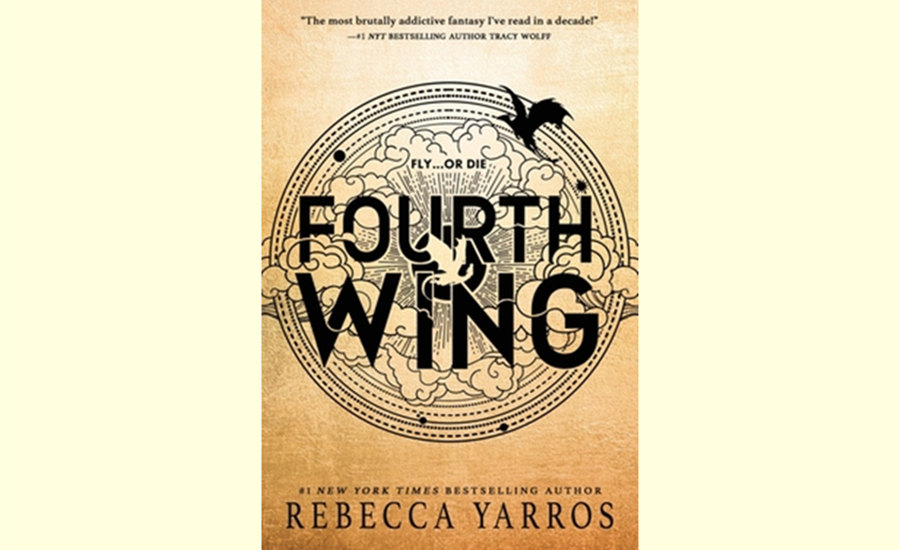
Warning: major spoilers ahead for Fourth Wing by Rebecca Yarros.
Fourth Wing drops Violet Sorrengail into a brutal rider training program where surviving the day is never guaranteed. Between the deadly trials at Basgiath, her complicated bond with Xaden Riorson, and the truth waiting beyond the kingdom’s official story, a lot happens fast. If you want a full refresher before moving on in The Empyrean series, here is a clear, detailed summary of what matters most.
What Fourth Wing Is About
At its core, Fourth Wing is a story about survival, power, and trust. Violet Sorrengail has spent her life preparing to become a scribe, not a soldier. She loves books, research, and history, and she expects to live a quieter life in the archives. That future disappears when her mother, General Lilith Sorrengail, orders her to enter the Rider Quadrant at Basgiath War College instead.
That change is not just inconvenient. It is potentially fatal. Basgiath is designed to break people down and weed out anyone who cannot survive the strain of becoming a dragon rider. Violet is smaller than most of the other cadets, physically more vulnerable, and immediately underestimated by nearly everyone around her. But she is also observant, disciplined, and much harder to shake than people expect.
The novel begins as a deadly school fantasy, but it steadily expands into something bigger. What starts as Violet’s fight to stay alive turns into a story about hidden history, political lies, dragon bonds, and a war that is far more dangerous than she has been taught to believe.
Violet Is Forced Into the Rider Quadrant
Violet never chooses this path for herself. Her late father nurtured her love of knowledge and expected she would become a scribe, and that life genuinely suited her. She understands texts, strategy, and the value of information. She does not enter the story dreaming of glory in battle.
Her mother has other plans. As one of the most powerful military leaders in Navarre, General Sorrengail decides Violet will join the riders, and Violet has almost no time to prepare. That choice sets up one of the book’s most important tensions: Violet is thrown into a world that does not respect caution, thoughtfulness, or softness, and she has to figure out how to stay herself without getting killed.
This section of the story matters because it frames Violet’s growth correctly. She is not a naturally reckless heroine who wants violence. She is someone forced into a brutal system and then expected to adapt faster than anyone thinks she can.
Basgiath Proves Very Quickly That Survival Comes First
The parapet sets the tone
The first major trial is the parapet, a narrow stone bridge suspended high above the ground. To even enter the Rider Quadrant, cadets have to cross it in dangerous weather with death waiting below. Some do not make it.
This scene is one of the clearest statements of what kind of book Fourth Wing is. Basgiath does not care about fairness. It does not protect the weak or give second chances. Violet survives the crossing, but the message is immediate: nobody is coming to make this easier for her.
Violet learns that intelligence has to become a weapon
Once training begins, Violet understands that raw strength is never going to be her advantage. She cannot overpower most of the people around her, and pretending otherwise would get her killed. So she leans into what she does have. She studies people. She thinks ahead. She uses speed, precision, and strategy instead of brute force.
That is one of the strongest parts of the novel. Violet’s progress feels earned because she does not suddenly become unbeatable. She survives because she learns how to move through danger differently. Even when other cadets mock her or assume she is weak, she keeps adjusting. Little by little, that persistence becomes one of her biggest strengths.
She also makes enemies early, especially among cadets who view her as an easy target. Jack Barlowe becomes one of the clearest examples of the cruelty built into Basgiath. He openly despises Violet and repeatedly tries to break her. His hostility keeps the pressure on and reminds both Violet and the reader that surviving school politics can be just as dangerous as surviving formal trials.
Her Relationships Shape the Story as Much as the Training Does
As Violet settles into life at Basgiath, two men become especially important to her story: Dain Aetos and Xaden Riorson. They represent very different versions of loyalty, safety, and power.
Dain offers comfort, but also control
Dain is Violet’s childhood friend, and early on he seems like the person most likely to help her survive. He cares about her, worries about her, and wants her protected. On the surface, that should make him easy to trust.
But Dain’s protectiveness quickly starts to feel restrictive. He wants Violet removed from the Rider Quadrant. He wants her safe in a way that often ignores what she wants for herself. Instead of seeing her as someone who can grow into this role, he keeps reacting to her as if she is too breakable to choose it.
That dynamic becomes more important as the book goes on. Dain is not simply cruel, but his version of care is rooted in control, and Violet increasingly understands that being loved is not the same thing as being respected.
Xaden begins as a threat and becomes something far more complicated
Xaden Riorson enters Violet’s life with every reason to feel dangerous. He is the son of the executed rebellion leader, and Violet’s mother played a major role in crushing that rebellion. He is powerful, deeply guarded, and marked by a political history Violet only partly understands at first.
Because of that, Violet expects him to hate her. Instead, their relationship develops in a much more layered way. Xaden does not coddle her, but he does see her clearly. He notices her intelligence, respects her nerve, and pushes her to become stronger rather than smaller. Their chemistry builds in the middle of danger, mistrust, and secrets, which gives the romance real tension from the start.
Threshing Changes Violet’s Entire Future
The novel’s biggest early turning point comes during Threshing, when cadets attempt to bond with dragons. This is the moment that determines whether they truly become riders. It is also where Violet’s story stops being about barely hanging on and starts becoming something much bigger.
Tairn makes Violet impossible to dismiss
Against every expectation, Violet bonds Tairn, one of the most powerful dragons alive. Tairn is formidable, feared, and impossible to treat casually. His choice immediately changes Violet’s position at Basgiath. The cadet many people assumed would die early is suddenly bonded to a dragon whose approval carries enormous weight.
This matters on both a practical and emotional level. Tairn gives Violet more protection, more authority, and more confidence, but he also forces her to step into a larger role whether she feels ready or not.
Andarna makes her even more unusual
As if bonding Tairn were not enough, Violet also bonds Andarna, a rare golden feathertail. That second bond is extraordinary and makes Violet stand out even more. Andarna is younger and more mysterious than Tairn, but she plays an important role in Violet’s growing power and in the sense that Violet has become central to events far beyond the normal rider experience.
Her signet gives her real power of her own
After bonding, Violet’s signet begins to manifest, and it is devastatingly strong: she can wield lightning. That development matters because it shifts her from being the underestimated girl who survives through wit alone to someone whose power cannot be ignored. Even so, the book never lets that power erase her vulnerability. Violet is still learning, still frightened, and still painfully aware that strength without control can be dangerous.
Violet and Xaden Move From Tension to Trust
Once Violet and Xaden are pulled closer together, the romance deepens in a way that feels woven into the plot rather than pasted on top of it. Their connection grows through training, shared danger, and the slow realization that neither one fits the simple story the kingdom tells about them.
Violet begins to understand that Xaden’s harsh exterior hides loyalty, sacrifice, and a carefully guarded sense of responsibility. Xaden, in turn, trusts Violet with more of the truth than he trusts most people. He trains her, protects her when it counts, and believes in her ability to survive without turning her into a project.
That difference is one reason their relationship becomes so compelling. Dain tries to keep Violet safe by limiting her. Xaden helps her become dangerous enough to survive. For Violet, that distinction changes everything.
By the time their attraction turns into love, it carries real weight. Violet is not only falling for Xaden the person. She is also falling away from the version of the world she was raised to believe in.
The Story Expands Beyond Basgiath
For a large part of the novel, Basgiath feels like the entire battlefield. The school is ruthless enough that surviving it seems like the whole point. But as Violet grows stronger and learns more, the book starts revealing cracks in Navarre’s official version of reality.
She begins to see that the kingdom is not telling the full truth about its enemies or the war beyond its borders. Information has been controlled. Some dangers have been minimized, hidden, or dismissed as myth. The more Violet learns, the less stable the official narrative becomes.
This shift gives Fourth Wing much of its momentum in the second half. The book stops being only about whether Violet can survive school. It becomes about whether she can survive the truth once she sees it.
The Final Mission Exposes the Lie at the Center of the Book
The climax pushes Violet out of the contained danger of Basgiath and into real combat. What she finds there changes her understanding of everything.
During the mission, Violet and the others discover that the threats they have been taught to dismiss are real. Venin and wyvern are not rumors or old stories. They exist, and they are horrifying. In one brutal stretch, the novel proves that the world outside Basgiath is far more dangerous than Navarre’s leadership has allowed most people to believe.
This revelation lands so hard because it reframes the entire book. Violet has spent months fighting to survive a system that was supposedly preparing her for the truth, only to learn that the system itself has been built around concealment.
She also realizes that Xaden has known far more than he could safely say. His secrets are not random emotional distance. They are tied to the larger political reality Violet is only now beginning to understand.
Fourth Wing Ending Explained
Dain’s betrayal becomes impossible to ignore
One of the most painful parts of the ending is Violet’s realization that Dain has crossed a line she cannot excuse. His signet allows him to read recent memories through touch, and Violet comes to understand that he used that ability without truly respecting her boundaries. That violation helps explain how dangerous information was exposed and why events unfold the way they do.
This moment matters because it confirms what the book has been building all along: Dain’s care has always come with a refusal to fully trust Violet’s judgment. By the end, that pattern feels less protective and far more damaging.
Violet learns Navarre has hidden the truth
The largest revelation is political. Violet discovers that Navarre has concealed the real nature of the threat beyond its wards, allowing people inside the kingdom to live with a false sense of security. She can no longer believe the clean, official version of the war she grew up with.
That truth changes Violet permanently. She is no longer just a rider trying to make it through training. She is now someone who has seen enough to question the foundation of her world.
Brennan being alive reshapes everything at once
Then the book delivers its biggest personal twist: Brennan, Violet’s brother, is alive. For most of the novel, he exists in Violet’s mind as a loss that helped define her family. Learning that he survived does more than surprise her. It rearranges her emotional history and ties her family directly to the hidden side of the conflict.
This reveal works so well because it is both intimate and political. Brennan is not just alive. His survival proves that the truth has been operating in the shadows much longer and much closer to Violet than she knew.
Why the ending matters so much
By the final pages, Violet is standing in a completely different life from the one she had at the beginning of the book. She is no longer a would-be scribe reluctantly trying to endure rider training. She has bonded two dragons, manifested extraordinary power, fallen in love with the kingdom’s most dangerous man, lost faith in the official story she was raised on, and discovered that her brother is alive.
That is why the ending hits so well. It does not just close a first-book arc. It blows open the entire series.
The Most Important Things to Remember From Fourth Wing
- Violet is forced to leave the scribe path and enter the Rider Quadrant at Basgiath War College.
- She survives by relying on intelligence, adaptability, and nerve instead of brute strength.
- She bonds both Tairn and Andarna, which makes her unusually powerful and politically significant.
- Her signet manifests as lightning-wielding power.
- Her relationship with Xaden grows from suspicion into love.
- Dain’s protectiveness becomes a real betrayal when Violet realizes he does not respect her autonomy or her memories.
- Venin and wyvern are real, and Navarre has hidden the truth about the larger war.
- Brennan is alive, which changes both Violet’s family story and the political stakes going forward.
Where the Story Goes Next
If you are reading through the series in order, the next book after Fourth Wing is Iron Flame. That is where the fallout from these revelations really starts to unfold.
But before moving on, the big thing to hold onto is this: Fourth Wing begins as a story about surviving a deadly war college, and it ends by revealing a much bigger war, a much uglier truth, and a much larger role for Violet than anyone, including Violet herself, expected.