
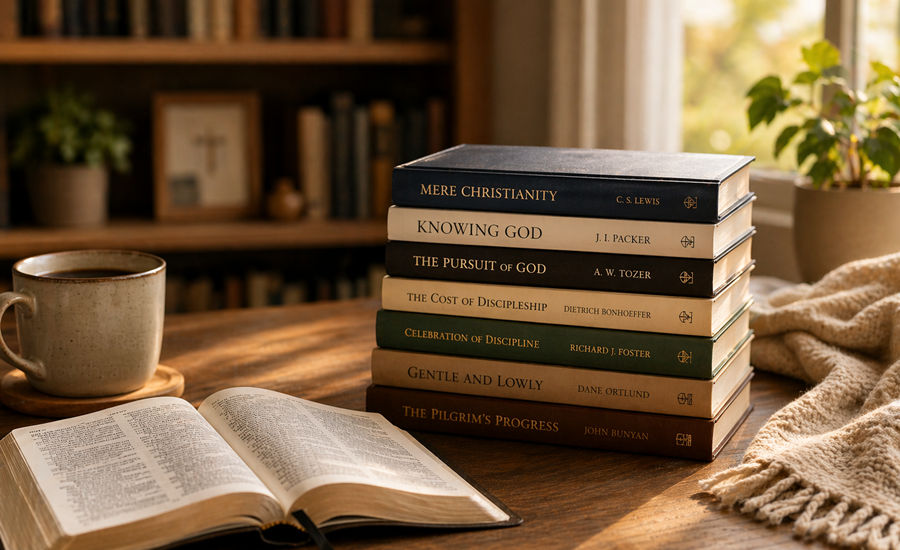
Finding a Christian book that truly stays with you can feel harder than it should. Some books offer comfort, some deepen your faith, and some help you see God more clearly right when you need it most. This guide gathers Christian books that readers return to for wisdom, encouragement, spiritual growth, and everyday life.
What Makes a Christian Book Truly Worth Reading?
A Christian book becomes lasting when it offers more than familiar language or quick inspiration. The books people return to most often are usually rooted in Scripture, honest about real life, and clear enough to make truth feel both understandable and personal. Some help readers think more deeply about God. Others strengthen prayer, discipleship, endurance, or everyday spiritual habits. The strongest ones do not just inform the mind. They shape the heart as well.
They also tend to meet readers in more than one season of life. A book that feels challenging at one point may become deeply comforting later. Another that once seemed simple may feel surprisingly rich years down the line. That is part of what makes Christian reading so meaningful. The right book can steady a person, renew perspective, and help faith feel more rooted in daily life.
12 Best Christian Books to Read
This list works best when it stays selective. Instead of trying to name every respected Christian title, it focuses on books that continue to matter because they do something specific and lasting. Some help readers understand the foundations of faith. Some deepen prayer and spiritual practice. Others offer comfort, conviction, or a clearer picture of who God is. Taken together, these books give readers a strong and balanced place to start.
1. Mere Christianity by C. S. Lewis
Mere Christianity is one of the clearest introductions to core Christian belief. Lewis writes about morality, human nature, the claims of Christ, and the shape of Christian life in a way that is intelligent without feeling difficult. He has a gift for explaining big ideas in plain language, which is one reason the book still connects with so many readers.
This is a strong choice for someone who wants to understand the basics of Christianity with more depth than a simple devotional can offer. It is especially helpful for thoughtful readers, new believers, or anyone returning to faith and wanting a fresh look at what Christians actually believe.
Best for: readers who want a thoughtful, accessible foundation in Christian belief.
2. Knowing God by J. I. Packer
Knowing God is a book about theology, but it never feels detached from real faith. Packer writes about God’s character, holiness, love, grace, and fatherhood in a way that is meant to lead readers toward worship rather than mere information. The book asks readers not just to learn about God, but to know Him more deeply.
It is especially valuable because it slows the reader down. Instead of rushing through ideas, it helps them settle. Readers who want a richer understanding of who God is and why that matters in everyday life will find a lot here.
Best for: readers who want a deeper, more reflective book about the character of God.
3. The Pursuit of God by A. W. Tozer
The Pursuit of God is brief, but it carries unusual spiritual intensity. Tozer writes about longing for God, drawing near to Him, and refusing to settle for a faith that is only external or habitual. The book feels devotional, but it is also searching. It gently exposes how easy it is to become familiar with Christian language while losing genuine spiritual hunger.
This is the kind of book that many readers pause while reading because it invites self-examination. It works especially well for people who feel spiritually dry, distracted, or aware that their faith needs renewal.
Best for: readers who want renewed desire for God and a more wholehearted inner life.
4. The Cost of Discipleship by Dietrich Bonhoeffer
Bonhoeffer’s book remains powerful because it treats following Christ as a serious calling rather than a comfortable identity. He writes about grace, obedience, sacrifice, and discipleship with clarity and moral force. His distinction between cheap grace and costly grace still feels searching because it exposes how easily faith can become passive, convenient, or merely verbal.
This is not the lightest book on the list, but it is one of the sharpest. It challenges readers to think honestly about whether their faith has real shape in daily life. Readers who want a more demanding and substantial look at discipleship will find it deeply worthwhile.
Best for: readers who want to think seriously about obedience, commitment, and the real cost of following Christ.
5. Celebration of Discipline by Richard J. Foster
Celebration of Discipline is one of the most practical books here. Foster walks through spiritual disciplines such as prayer, fasting, meditation, simplicity, service, confession, and worship, showing how these practices help form a deeper Christian life. He does not present them as spiritual performance, but as ways of opening the heart to God’s transforming work.
What makes the book useful is its balance of depth and practicality. It gives readers structure without becoming rigid. For someone who wants to move beyond vague good intentions and build a more intentional spiritual rhythm, this book offers a clear path.
Best for: readers who want practical help in building consistent spiritual habits.
6. The Purpose Driven Life by Rick Warren
The Purpose Driven Life speaks directly to one of the questions many people carry quietly: what is my life for? Warren writes in a simple, direct style about purpose, worship, calling, community, and eternity. The book is easy to follow, which makes it especially approachable for readers who may feel intimidated by denser Christian nonfiction.
Its strength is clarity. It connects Christian truth to everyday life in a way that feels usable rather than abstract. That makes it a strong choice for readers who want a clear, encouraging book that helps them reconnect daily life to God’s larger purposes.
Best for: new believers, returning Christians, or readers looking for an accessible book on Christian purpose.
7. Desiring God by John Piper
Desiring God centers on a clear and memorable idea: that joy in God is central to Christian life. Piper argues that delight, worship, obedience, and satisfaction in God belong together. The book pushes readers to think about whether faith has become mostly duty, and whether they are truly finding their deepest joy in God Himself.
This book can feel stretching, which is part of its value. It is more theological than some of the other titles here, but its central theme is easy to grasp. Readers who want a book that engages both conviction and affection will find it especially meaningful.
Best for: readers who want a deeper book on worship, joy, and wholehearted devotion.
8. The Pilgrim’s Progress by John Bunyan
The Pilgrim’s Progress remains one of the best-known Christian classics because it turns the life of faith into a story readers can picture. Through allegory, Bunyan writes about temptation, fear, perseverance, distraction, suffering, and hope in a way that feels vivid and memorable. Even readers who do not usually reach for older books often find that its spiritual insights still land with surprising force.
This book offers something different from a straightforward theology title. It gives readers images and scenes that stay with them. For readers who appreciate story, symbolism, and classic Christian literature, it can be especially rewarding.
Best for: readers who enjoy storytelling and want a classic picture of the Christian journey.
9. Gentle and Lowly by Dane Ortlund
Gentle and Lowly focuses on the heart of Christ toward sinners and sufferers. Ortlund writes with warmth and biblical care, showing that Jesus is not reluctant to receive weary people. The book is comforting, but it is not vague. Its reassurance comes from sustained reflection on Scripture and on the tenderness of Christ’s character.
This makes it especially meaningful for readers carrying shame, exhaustion, or quiet spiritual heaviness. It does not simply tell readers to feel better. It helps them see Christ more clearly, and that shift often brings real relief.
Best for: readers who need comfort, reassurance, and a clearer sense of Christ’s compassion.
10. The Hiding Place by Corrie ten Boom
The Hiding Place is both a memoir and a testimony of faith under suffering. Corrie ten Boom tells the story of her family’s courage during World War II, their imprisonment, and the sustaining grace of God through fear, grief, and loss. The book is moving because it shows faith lived under pressure rather than discussed from a distance.
Its power lies in its honesty. This is not polished inspiration. It is faith tested in deeply painful circumstances. Readers who are walking through hardship, or who find strength in true stories of courage and endurance, often find this book especially memorable.
Best for: readers who want a true story of suffering, courage, and resilient faith.
11. Crazy Love by Francis Chan
Crazy Love is written for readers who sense that faith has become too comfortable or too routine. Chan writes with urgency about the greatness of God’s love and the danger of responding to it with a lukewarm life. The tone is direct, but the goal is not guilt. It is to call readers back to sincerity, surrender, and wholehearted devotion.
This book works well because it is clear and challenging. It asks readers to look honestly at their priorities, habits, and assumptions about what Christian life should look like. For some, it feels like a wake-up call. For others, it becomes a reset.
Best for: readers who want a direct challenge to spiritual complacency.
12. Prayer by Timothy Keller
Many Christians want a stronger prayer life but do not know how to move from good intentions to real practice. Keller’s Prayer helps with both the meaning and the method of prayer. He writes about dependence on God, the purpose of prayer, common struggles, and practical ways to grow in consistency and depth.
The book stands out because it balances thoughtfulness with usefulness. It does not reduce prayer to a technique, but it also does not stay abstract. Readers come away with both a fuller vision of prayer and a clearer sense of how to practice it in ordinary life.
Best for: readers who want to deepen their prayer life in a steady, practical way.
These twelve books are not all trying to do the same thing, which is exactly why a list like this is useful. Some are best for learning the foundations of faith. Some strengthen spiritual habits. Some comfort weary readers, while others press for deeper obedience. The right choice depends less on which title sounds most impressive and more on what kind of help, clarity, or encouragement you need right now.
How to Choose the Right Christian Book for This Season of Life
The best Christian book for you may have less to do with popularity and more to do with what you need most right now. A reader wanting a stronger foundation may not need the same book as someone walking through grief, spiritual dryness, or a season of deeper theological curiosity.
If you want to grow closer to God in daily life, The Pursuit of God, Celebration of Discipline, and Prayer are especially strong choices. These books help readers slow down, pay attention, and build a more intentional life with God.
If you are newer to faith or want a clearer grasp of Christian basics, Mere Christianity and The Purpose Driven Life make strong starting points. They are accessible without feeling thin, which makes them helpful when you want clarity without overwhelm.
If you want to think more deeply about who God is and what worship means, Knowing God and Desiring God offer more theological depth while still remaining readable for many everyday readers.
If you are in a hard season and need comfort more than challenge, Gentle and Lowly and The Hiding Place can be especially meaningful. One gently reminds readers of Christ’s compassion, while the other shows what steady faith can look like under real suffering.
If you are choosing a Christian book as a gift, it often helps to think about the person’s season instead of simply picking the most famous title. A newer believer may appreciate something clear and welcoming. Someone weary may need a book that comforts more than it confronts. A reflective reader may enjoy a classic that rewards slow reading.
In the end, it is usually better to choose one well-matched book than to collect a long stack you never begin. The right next read often does more good than the most impressive reading list.