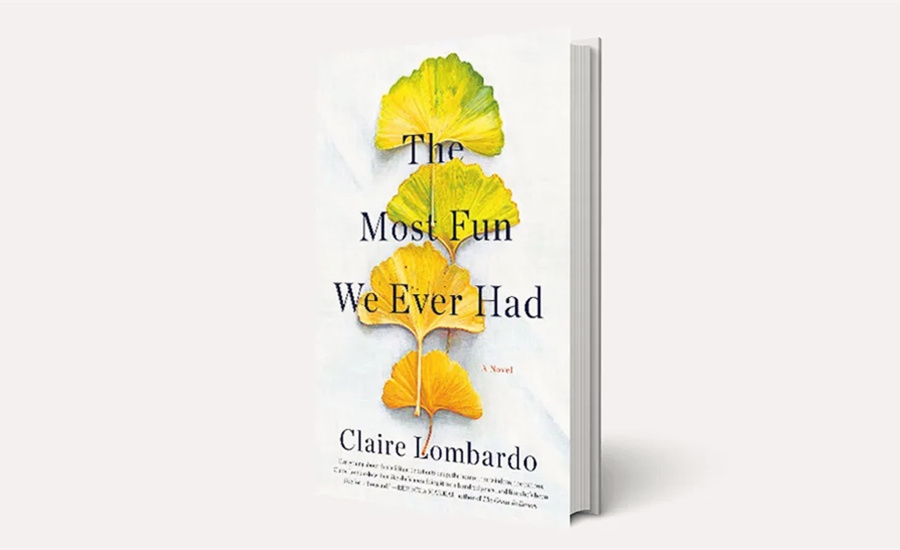
The Most Fun We Ever Had is a sweeping family novel about Marilyn and David Sorenson, their four daughters, and the old secret that unsettles the life they have built together. If you want a clear summary of the book, this guide walks through the plot, the main characters, the central themes, and what the ending is really doing.
Note: This article includes spoilers.
What Is The Most Fun We Ever Had About?
The Most Fun We Ever Had is a multigenerational family saga set largely in suburban Chicago. At the center of the novel are Marilyn and David Sorenson, a couple whose long, passionate marriage has become part of the family legend. Their four adult daughters have grown up in the glow of that love story, but also under the pressure of it.
As the novel unfolds, it becomes clear that the Sorensons are not held together by love alone. They are also bound by competition, memory, resentment, grief, and the roles each person has been expected to play for years. When a long-buried secret comes back into view, the family is forced to reckon with truths it has avoided and stories it has been telling itself for decades.
The Most Fun We Ever Had Summary
The novel moves between past and present, but its emotional center is one turbulent stretch in the Sorenson family’s later life. Marilyn and David fell in love young and built a marriage that looks almost mythic from the outside. That bond shapes the atmosphere of the whole family. Their daughters grow up not only loved, but constantly aware that their parents’ marriage seems bigger, stronger, and more romantic than anything else around them.
By adulthood, each of the four sisters is struggling in her own way. Wendy, the oldest, is funny, volatile, and deeply wounded beneath her sharp edges. Violet appears steady and conventional, but her carefully ordered life depends on keeping the past contained. Liza is accomplished and thoughtful, yet unsettled by the gap between outward success and private fulfillment. Grace, the youngest, is drifting through adulthood and hiding how lost she really feels.
The family’s fragile balance shifts when Jonah enters the picture. Years earlier, Violet became pregnant and secretly gave birth, then placed the baby for adoption. Wendy helped her hide the pregnancy, and the truth was pushed far enough underground that the rest of the family could keep living around it. Jonah’s return brings that history back into the open and makes it impossible for the Sorensons to go on pretending the past is finished.
From there, the novel widens rather than narrows. It is not built like a mystery that races toward one reveal. Instead, Claire Lombardo shows how one family secret touches everything around it. Long-standing tensions between the sisters sharpen. Old grievances resurface. Marriages and self-images begin to look less stable. Even Marilyn and David, whose relationship has always seemed like the family’s fixed point, are seen with more complexity as the story goes on.
Much of the novel’s power comes from how ordinary and specific these conflicts feel. People compare themselves to one another. They misremember things. They protect the version of the family story that hurts them the least. What makes the plot compelling is not just what happened years ago, but what it costs everyone to keep carrying it in silence.
Who Are the Main Characters in The Most Fun We Ever Had?
Marilyn Sorenson
Marilyn is the family matriarch and one of the novel’s strongest forces. She is intelligent, intense, loving, and often exhausted by the emotional sprawl of family life. Her marriage to David is a source of real tenderness, but it also shapes the expectations surrounding everyone else. Marilyn is not a distant symbolic mother figure. She is vivid, flawed, reactive, and deeply invested in her children.
David Sorenson
David is Marilyn’s husband and the family patriarch. He is warm, charismatic, and closely tied to the image of the Sorensons as a family built on enduring romantic love. He is easier than Marilyn in some ways, but not simpler. His role in the novel is partly to show how even a loving father and husband can become part of a family mythology that leaves little room for messier truths.
Wendy
Wendy, the oldest daughter, often looks like the family’s chaos engine. She is quick-tongued, impulsive, and capable of hurting people before they can hurt her. But the novel never leaves her there. Wendy is also deeply loyal, emotionally exposed, and marked by grief in ways that shape much of her behavior. She is one of the book’s most difficult and most memorable characters.
Violet
Violet has long been treated as the stable daughter, the one most committed to order, family life, and control. That image becomes harder to maintain once Jonah’s existence returns to the center of the story. Violet’s sections reveal how a person can build an entire adult identity around appearing fine, even when something unresolved is still quietly structuring everything beneath the surface.
Liza
Liza is the sister who can seem easiest to miss at first, which is part of what makes her storyline so affecting. She is successful, serious, and often more self-aware than the others, yet she is also wrestling with uncertainty about love, ambition, and the kind of life she is building. Her arc gives the novel some of its sharpest insight into the distance between competence and contentment.
Grace
Grace, the youngest, has grown up in a different emotional position from her sisters. She is the late-arriving child, both protected and underestimated, and she carries a quiet sense of not knowing who she is supposed to be. Her story is one of drift, insecurity, and the painful effort of becoming honest about her own life.
What Themes Shape The Most Fun We Ever Had?
Family as Love and Pressure at the Same Time
One of the novel’s clearest strengths is the way it refuses to flatten family life into something purely comforting or purely damaging. The Sorensons love one another. That part is real. But love does not cancel out competition, comparison, guilt, or exhaustion. The family is a place of warmth, and also a place where old roles are hard to escape.
Marriage, Intimacy, and the Burden of Example
Marilyn and David’s marriage is central to the novel, not because it is perfect, but because it has been treated as the family standard for so long. Their daughters do not simply admire that love story. They live in relation to it. The book keeps asking what happens when one marriage becomes so idealized that everyone else starts to feel like they are failing by comparison.
Sisterhood and the Problem of Being Known
The Sorenson sisters understand one another in ways outsiders never could, but that closeness does not make things easy. Sisterhood in this novel is affectionate, bruising, funny, and merciless. The sisters remember each other’s worst moments. They assign each other identities. They protect one another and wound one another, sometimes in the same conversation. The novel captures how hard it can be to grow into a fuller self when your family still sees the version of you formed years ago.
Secrets, Memory, and Family Mythology
The book is deeply interested in the stories families choose to keep. Some memories are repeated until they become legend. Others are buried because they threaten the version of the family people want to believe in. Jonah’s return matters not only because he is a secret revealed, but because his presence interrupts the Sorensons’ preferred narrative about themselves.
Motherhood and Emotional Inheritance
Motherhood runs through the novel in several different forms, from Marilyn’s experience as a mother to the daughters’ own relationships with pregnancy, parenting, and care. The book suggests that inheritance is emotional as much as biological. Children do not only inherit looks or habits. They also inherit fears, expectations, silences, and patterns of love.
What Happens at the End of The Most Fun We Ever Had?
The ending does not aim for a perfectly repaired family, and that is part of why it works. By the final stretch of the novel, the Sorensons are no longer able to keep the same distance from the truth. Jonah is no longer a hidden part of Violet’s past. His place in the family has forced everyone to acknowledge what has been avoided for years.
Across the family, the ending works less as a clean resolution than as a shift toward greater honesty. Violet can no longer preserve her life simply by containing the past. Wendy’s volatility reads more clearly as pain, grief, and misplaced protection rather than just rebellion. Liza faces her own future with more realism, and Grace is pushed toward a more truthful account of who she is and what she wants.
Even Marilyn and David are understood a little differently by the end. Their love remains real, but the novel no longer lets it stand as a simple answer to everything else. The family is still messy. People are still hurt. But more of the truth is finally in the room.
That is what the ending ultimately offers: not perfection, not closure in the neatest sense, but a more honest version of connection. The Sorensons do not become uncomplicated. They become more real to one another.
Is The Most Fun We Ever Had Worth Reading?
If you like large, character-driven novels that care about emotional texture as much as plot, this book is well worth reading. It is especially strong on sibling dynamics, long marriages, private disappointments, and the strange mix of intimacy and irritation that can define family life. Claire Lombardo gives the Sorensons enough depth that even their worst moments feel human rather than convenient.
Readers looking for a tightly plotted or fast-moving novel may find its scale demanding. The cast is large, the timeline shifts, and the book takes its time. But that expansiveness is also what gives it its force. This is the kind of family saga that asks you to live with its characters, not just watch them move through a sequence of events.
The Most Fun We Ever Had lingers because it understands that even loving families are built from contradiction. People disappoint one another. They misread one another. They keep going anyway. The novel’s emotional impact comes from how honestly it stays with that truth.
Conclusion
The Most Fun We Ever Had is a rich, intimate novel about family stories, inherited expectations, and the gap between how people appear and who they really are. Its summary may begin with a secret and a complicated household, but what makes the book memorable is the way it treats every member of the Sorenson family as fully human. That is why the novel feels so absorbing, and why it tends to stay with readers after the last page.