
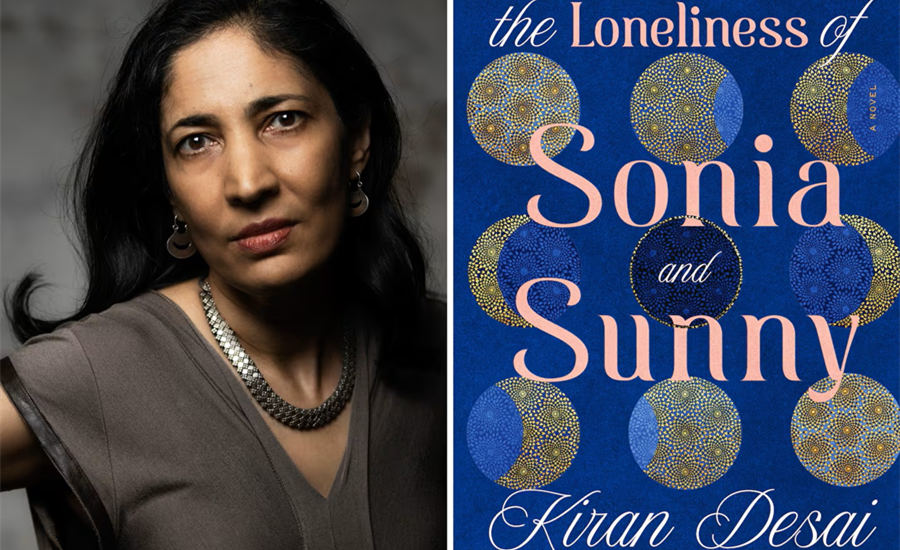
If you searched “Sonia and Sunny,” you were probably looking for The Loneliness of Sonia and Sunny, Kiran Desai’s deeply layered novel about love, loneliness, family, and belonging. This is not a quick, simple romance. It is a thoughtful literary story that follows two young people while opening into much bigger questions about identity, migration, and the emotional weight of history. If you are wondering what the book is really about and what kind of reading experience it offers, this is where to start.
What Is The Loneliness of Sonia and Sunny About?
The novel centers on Sonia and Sunny, two young people whose families have a history with one another long before the pair truly connect themselves. Sonia is an aspiring novelist who has studied in Vermont. Sunny is living in New York, where his life is shaped by work, ambition, and the complicated push and pull of family and identity. When their paths meet in India, the novel uses that encounter as the starting point for something much richer than a simple love story.
What follows is not built around fast twists or a tidy romantic arc. Instead, the book opens outward. It becomes a story about emotional distance, inherited pressure, private longing, and the ways family and history continue to shape even the most personal choices. The relationship between Sonia and Sunny matters, but the novel never isolates it from the world around them. That wider frame is exactly what gives the book its emotional depth.
This also explains why so many readers search the shorter phrase “Sonia and Sunny.” The names are memorable, but the real curiosity usually lies in the novel itself: who these two characters are, what binds them together, and why the story feels more significant than its central pairing alone might suggest.
Who Are Sonia and Sunny in the Novel?
Sonia comes across as sensitive, inward, and artistically serious. She is not written as a polished symbol of innocence or clarity. Instead, she feels uncertain, observant, and emotionally porous, which makes her presence on the page feel immediate. There is a vulnerability to her, but also intelligence and self-awareness. She seems to move through the novel with the uneasy knowledge that desire, creativity, and loneliness can become tangled together very quickly.
Sunny brings a different energy. He feels more outwardly tied to the pressures of the world around him: family expectations, social codes, work, masculinity, and the difficulty of belonging fully anywhere. His character adds tension because he is not only responding to private feeling. He is also carrying the weight of what has been handed to him by history, culture, and family structure. That makes him more than a romantic counterpart. He becomes one of the novel’s clearest ways of exploring how identity is formed under pressure.
Together, Sonia and Sunny are compelling because the novel does not romanticize connection. Their bond carries possibility, but it is also marked by timing, awkwardness, family memory, emotional distance, and the larger structures surrounding them. The result is a relationship that feels human rather than idealized. Their closeness matters because it is fragile, shaped by forces neither of them can fully step outside.
What Themes Shape The Loneliness of Sonia and Sunny?
Loneliness and emotional distance
The title points directly to one of the novel’s deepest concerns. This is a book about loneliness, but not only in the narrow sense of being alone. It is about the loneliness that can exist inside family, intimacy, migration, ambition, and modern life itself. Characters are surrounded by people, memory, and obligation, yet still remain difficult to reach.
Desai seems especially interested in the loneliness that survives even when connection is possible. The spaces between people matter as much as the moments of closeness. Misunderstanding, silence, longing, and private inner worlds all shape the emotional weather of the novel. That is part of what gives the story its ache. It understands that love does not erase loneliness automatically, and that being seen by another person can be as difficult as it is necessary.
Family, inheritance, and generational tension
Family is not a backdrop here. It is one of the engines of the novel. Parents, grandparents, old loyalties, and inherited beliefs continue to shape the present, often in ways the characters cannot easily escape. The book keeps returning to the idea that no life begins cleanly on its own. Every attempt at freedom carries traces of what came before.
That gives the story much of its emotional weight. Sonia and Sunny are not just making choices for themselves in the present tense. They are also dealing with what has been passed down through generations: pride, anxiety, prejudice, tenderness, silence, and expectation. The novel treats inheritance as emotional as well as cultural, which makes its family dynamics feel especially rich.
Migration, race, class, and identity
One reason the novel feels so expansive is that it does not separate inner life from public life. It places personal feeling alongside the realities of migration, class, race, and social hierarchy. These are not side themes attached to the story after the fact. They shape how the characters move through the world, how they are seen, and what kinds of futures seem available to them.
This gives the book a broader resonance than many relationship-centered novels. Sonia and Sunny’s loneliness is connected to movement across countries, to the friction between India and America, and to the burden of being interpreted through inherited social categories. Identity here is never simple or fully stable. It is negotiated, resisted, performed, questioned, and sometimes painfully imposed from the outside.
Love, belonging, and self-understanding
Although the novel is often described as a love story, what it really returns to is belonging. Love matters, but the book treats it as something bound up with recognition, timing, family history, and the hope of being known without being reduced. In that sense, romance is only part of the emotional picture.
The more lasting question the novel asks is where a person can belong at all. With whom can one feel at home? In which country, family, or version of the self can that feeling exist? Sonia and Sunny seem to search not only for each other, but for a way of living that feels emotionally true. That gives the novel a reflective depth that reaches well beyond romance.
What Kind of Reading Experience Does This Book Offer?
This is a long, immersive literary novel with a reflective tone and a patient rhythm. It is more interested in emotional accumulation than in quick plot mechanics. The pleasure of reading it comes from entering its atmosphere, following its shifting tensions, and noticing how private feeling keeps intersecting with history, family, and social life.
That pace will not be right for every reader. Anyone looking for a brisk, plot-heavy story may find the novel demanding. But readers who enjoy character-driven fiction, layered ideas, and slow-building emotional force will likely find the book rewarding. It asks for attention, and it gives depth in return.
The writing experience it offers is intimate and expansive at once. One scene may feel quietly personal, while the next opens into larger questions about art, displacement, cultural belonging, or generational pressure. That balance is one of the book’s strongest qualities. It never loses sight of the individual, yet it never pretends the individual exists outside the forces of the world.
Who Will Enjoy The Loneliness of Sonia and Sunny Most?
This novel will likely resonate most with readers who already enjoy literary fiction that is thoughtful, emotionally layered, and socially aware. It is a strong fit for people who like family sagas, books about migration and identity, and novels that leave room for ambiguity rather than rushing toward easy answers. Book clubs may also find a great deal to discuss, and the novel already lends itself naturally to a broader reading guide around loneliness, family inheritance, race, class, belonging, and the fragile shape of intimacy.
The best approach is to come to the book expecting depth rather than speed. It is not primarily a comfort read or a conventional romance. It is a serious, searching novel that wants to stay with difficult feelings and larger questions. For the right reader, that is precisely what makes it memorable.
Featured Image Source: https://www.bostonglobe.com/2025/09/25/arts/kiran-desai-loneliness-of-sonia-and-sunny/