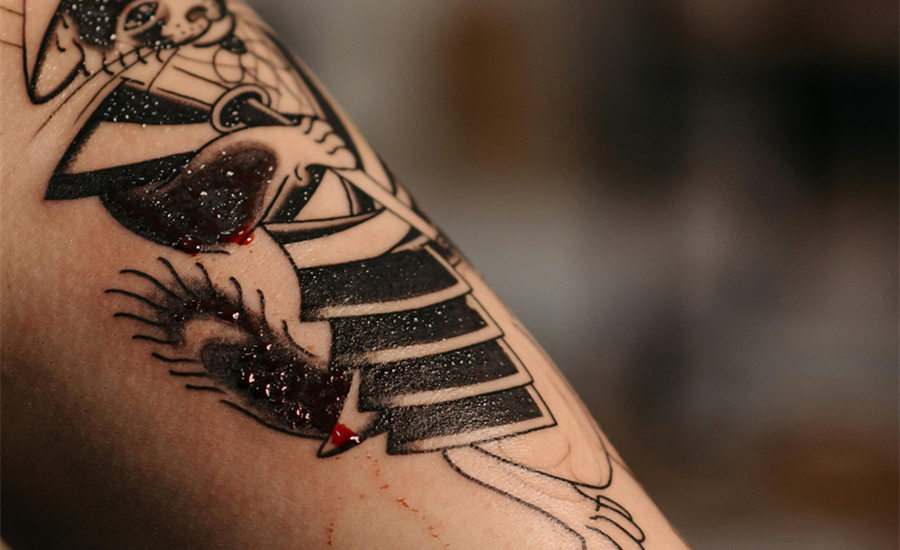
A fresh tattoo can look alarming fast. A little blood under the wrap, pink fluid on the skin, and smeared ink can make it seem like something has gone wrong, even when the tattoo is simply new. In most cases, light bleeding early on is normal. What matters is how much you are seeing, how long it lasts, and whether the area starts settling down instead of getting worse.
Why Do Tattoos Bleed in the First Place?
Tattoos bleed because tattooing is, at its core, a skin injury. The needle moves in and out of the skin over and over to place ink below the surface. That creates thousands of tiny punctures, and your body responds the same way it would to any fresh wound.
That early response can include a little bleeding, soreness, redness, warmth, and fluid. This is your body shifting into repair mode. It is also why a brand-new tattoo can look much harsher in the first several hours than it will a few days later.
For many people, the visual shock is worse than the actual problem. Fresh tattoos often look messy before they look healed.
Is It Normal for a New Tattoo to Bleed?
Yes, a small amount of bleeding is usually normal, especially during the appointment and in the first several hours after it. Many people see light blood staining on the bandage or notice pinkish, ink-tinted fluid once the wrap comes off.
The important distinction is between light bleeding and ongoing heavy bleeding. A little spotting or seepage is very different from a tattoo that keeps producing fresh blood, repeatedly soaks dressings, or looks more dramatic with each passing hour.
Some tattoos also bleed more than others. A tiny linework tattoo may barely do it at all, while a large piece with dense shading can leave the skin more irritated and reactive. Placement matters too. Areas that move a lot or rub against clothing may look rougher in the beginning.
How Long Do Tattoos Usually Bleed?
During the first few hours
This is when bleeding is most expected. The skin has just been tattooed, so a little blood and fluid release is common. If your artist covers the area before you leave, you may notice staining under the wrap later that day.
Within the first 24 hours
The first day is usually when the tattoo looks the messiest. You might see a mix of blood, fluid, and excess ink on the bandage or skin. That can look dramatic, but it does not automatically mean anything is wrong.
By the end of that first day, though, the tattoo should usually be calming down rather than ramping up. It may still be sore and red, but the bleeding itself should not be intensifying.
After 24 to 48 hours
By this stage, active bleeding should generally be fading or already gone. The tattoo may still feel tender, and you may start to notice dryness, flaking, or light scabbing. That is a much more typical next step than continued fresh bleeding.
If you are still seeing obvious blood after a day or two, or the tattoo seems to be bleeding more instead of less, that is a sign to pay closer attention.
What Can Make a Tattoo Bleed More Than Usual?
A longer or more intense tattoo session
The longer the skin is being worked, the more irritated it can become. Large tattoos, heavy shading, detailed linework, and color packing can all leave the area more inflamed, which may lead to more bleeding early on.
Sensitive placement areas
Some parts of the body simply react more. Areas with thinner skin, more movement, or more friction from clothing can look more swollen, more irritated, or slightly bloodier in the beginning.
Alcohol or blood-thinning factors
Some people bleed more easily than others. Alcohol, certain medications, and individual body differences can all affect how much bleeding happens during and right after a tattoo session. That does not automatically mean there is a complication, but it can help explain why one fresh tattoo looks much messier than another.
Overworked skin
If the same area gets worked repeatedly, the skin can end up extra raw. That can lead to more bleeding, more tenderness, and a rougher first phase of healing. Even within one tattoo, some sections may look calmer than others for this reason.
Friction right after the appointment
Tight clothes, rubbing, scratching, exercise that causes heavy sweat and contact, or rough wrap removal can keep the area irritated. Fresh tattoos heal best when they are kept clean, protected, and left alone as much as possible.
When Tattoo Bleeding May Not Be Normal
The biggest warning sign is bleeding that does not start tapering off. A normal fresh tattoo usually looks most intense early, then slowly starts to settle. A tattoo that keeps actively bleeding, keeps soaking through dressings, or looks worse instead of better deserves more attention.
It also helps to look at the bigger picture. Normal healing can include soreness, redness, some clear fluid, and later on a bit of itching or flaking. What is less reassuring is pain that keeps increasing, redness that spreads farther out, heat that feels more intense, or swelling that becomes more pronounced instead of easing up.
Pus, a strong unpleasant smell, fever, chills, red streaking, or other unusual skin reactions are not things to shrug off. Those are the kinds of changes that move a tattoo out of the “fresh but normal” category and into “get help” territory.
What to Do If Your Tattoo Is Bleeding
Start by looking at it calmly
A little blood mixed with fluid and ink can look like much more than it really is. Before assuming something is wrong, take a step back and ask whether you are seeing light spotting, a stained wrap, or truly ongoing bleeding.
Follow your artist’s aftercare instructions closely
This is where a lot of people accidentally make a fresh tattoo angrier than it needs to be. Wash your hands first. Remove the wrap the way your artist told you to. Clean the area gently, not aggressively, and pat it dry rather than rubbing it.
Use only the aftercare product your artist recommended, or a simple, light product that fits their guidance. More is not better. A thick, greasy layer can leave the tattoo feeling smothered and messy instead of comfortable.
Reduce irritation
Give the area room. Loose clothing is usually kinder than anything tight or abrasive. Try not to scratch, pick, or keep checking the tattoo every few minutes. Early healing tends to go better when the skin is clean, dry, lightly moisturized if instructed, and not constantly disturbed.
Ask your artist if you are unsure
A tattoo artist sees fresh tattoos every day. If the bleeding seems unusual, send a clear photo and explain how long it has been happening. In many cases, they can tell you whether it still sounds like ordinary healing or whether it is time to get checked medically.
When to Call a Doctor Instead of Waiting It Out
Call a doctor or seek medical care if the tattoo is bleeding heavily, the pain is worsening instead of improving, the redness is spreading, or the skin feels increasingly hot and swollen. You should also get medical help if you notice pus, a bad odor, fever, chills, red streaks, or if you start feeling sick overall.
A tattoo is supposed to feel like a healing wound, not an escalating one. Once the pattern shifts from gradual improvement to worsening symptoms, it makes sense to stop guessing.