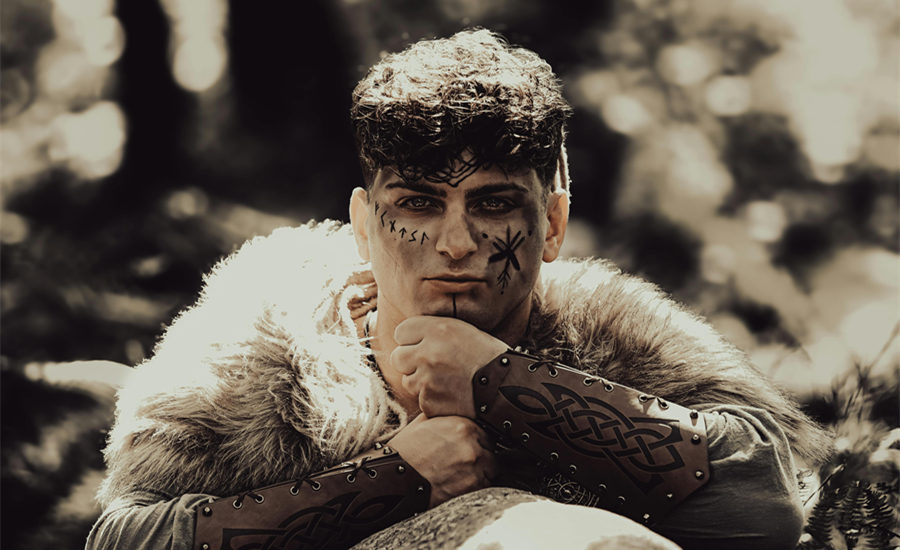
Traditional Viking tattoos have a bold, timeless pull. They feel powerful without trying too hard, and they often speak to strength, resilience, protection, and identity. That is exactly why so many people keep coming back to this style. Still, the history behind it is not always explained clearly. Many designs are called “authentic Viking tattoos” online, even when the evidence is limited. In most cases, these tattoos are better understood as Norse-inspired designs shaped by mythology, symbolism, and a dark, striking visual style.
What Are Traditional Viking Tattoos?
When people talk about traditional Viking tattoos, they are usually referring to tattoos inspired by Norse culture rather than a fully documented Viking tattoo tradition. These designs often draw from runes, ravens, wolves, longships, Thor’s hammer, Yggdrasil, and other symbols connected to Norse mythology and early Scandinavian art.
That distinction matters, but it does not take anything away from the style. If anything, it makes it more interesting. Instead of forcing every design into the category of “historically exact,” it leaves room for personal meaning, thoughtful symbolism, and artistic interpretation. A tattoo can still feel grounded, intentional, and powerful without pretending to be a direct copy of something preserved from the Viking Age.
Visually, traditional Viking tattoos usually have a darker, heavier feel than many modern tattoo trends. Black ink, bold contrast, strong shapes, and mythic imagery all help create that old-world atmosphere. Even a simpler design tends to feel substantial, which is part of the appeal.
Did Vikings Really Have Tattoos?
This is one of the biggest questions people have before choosing this style, and the honest answer is that the evidence is limited.
Much of the modern discussion comes from a historical account describing the Rus with dark markings on their bodies. That passage is often brought up in conversations about Viking tattoos, but it does not give us a clear guide to what those markings were, how widespread they may have been, or whether they looked anything like the designs people now imagine. It is also worth being careful about treating the Rus as identical to every Viking group across the Norse world.
So the most accurate view is a balanced one. Some Norse-linked people may have worn body markings, but there is not enough evidence to say that modern Viking tattoo designs are exact historical reconstructions.
That is why traditional Viking tattoos today are best understood as artistic interpretations. They are inspired by mythology, carved motifs, symbolic imagery, and the larger visual world associated with Norse culture. That approach is both more honest and more useful. It lets people choose a tattoo for what it genuinely represents instead of relying on exaggerated history claims.
What Traditional Viking Tattoos Usually Symbolize
One reason Viking-inspired tattoos remain so popular is that the symbolism feels strong and clear without becoming overexplained. Even when two people choose the same motif, the personal meaning behind it can be completely different.
Strength and Courage
A lot of Viking tattoo imagery is tied to endurance, bravery, and the ability to keep moving through hard things. That emotional tone fits naturally with Norse mythology, where struggle, fate, and resilience appear again and again.
This is part of what gives the style its lasting appeal. It does not feel delicate or overly polished. Even a smaller design can suggest steadiness and inner toughness. For many people, that feels more meaningful than a tattoo that is purely decorative.
Protection and Resilience
Protection is another major theme, especially in designs centered on Thor’s hammer. Tattoos with protective symbolism often resonate with people who want something that feels grounding, solid, and hard to shake.
That meaning can be practical, emotional, or both. For one person, it may symbolize strength and safety. For another, it may represent boundaries, healing, or the feeling of standing firmly in your own life after a difficult season.
Fate and Spiritual Connection
Some Viking-inspired tattoos feel more reflective than aggressive. Yggdrasil, runes, and other myth-based designs often carry a deeper spiritual tone. They can suggest connection, balance, destiny, or the sense that life has more layers than what we see on the surface.
That quieter energy is part of what makes the style more versatile than people sometimes expect. Not every Viking tattoo has to feel like a battle scene. Some of the most striking ones feel calm, rooted, and quietly powerful.
Heritage and Personal Identity
For some people, the appeal is tied to heritage or a sense of connection to Northern European myth and symbolism. For others, it is less about ancestry and more about identity. The imagery feels weathered, strong, and emotionally grounded in a way that resonates.
That connection does not have to follow one exact formula. A Viking-inspired tattoo can represent roots, independence, endurance, femininity with edge, masculinity, or simply a deep pull toward symbolism that feels heavier and more timeless than trend-driven designs.
Adventure, Survival, and Warrior Spirit
Longships, wolves, ravens, and certain rune-based designs often carry a strong sense of movement and survival. These images speak to challenge, risk, and the ability to keep going.
That is why Viking-inspired tattoos often appeal to people who see themselves as survivors, explorers, or fighters in their own way. The warrior spirit behind the style does not have to be literal. It can be emotional, personal, and quietly fierce.
Popular Traditional Viking Tattoo Ideas
This is where the style becomes especially compelling, because there are so many ways to interpret it. Some people want a tattoo that is small and symbolic. Others want a full sleeve that feels immersive and dramatic. The best design usually comes down to the kind of meaning and visual impact the person wants most.
Rune Tattoos
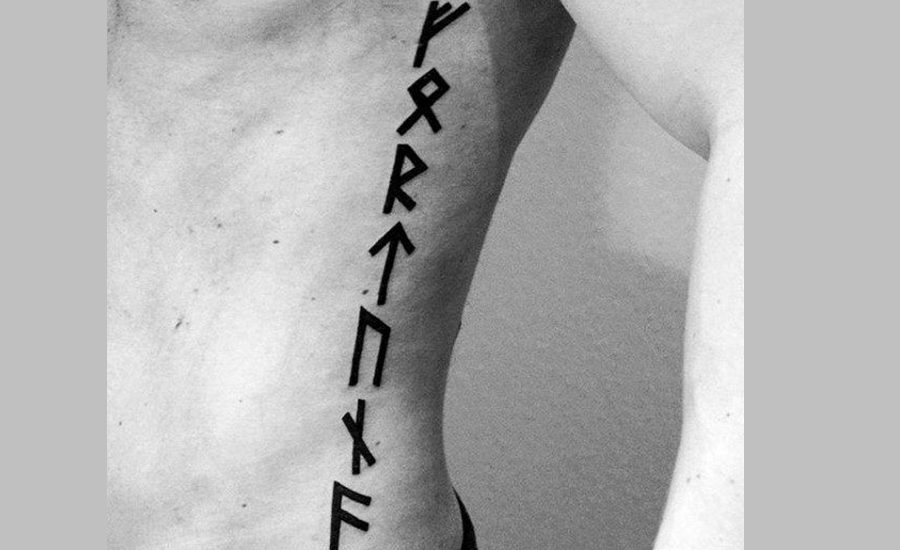
Image source: Pinterest
Rune tattoos are one of the most popular choices because they feel simple, ancient, and deeply personal. A single rune can look clean and restrained, while a line of runes can feel more intimate and mysterious.
Part of the appeal is that rune tattoos do not need to be large to feel meaningful. They work well on the wrist, forearm, back of the arm, behind the ear, collarbone, ankle, or even the hand if someone wants something visible and bold.
They also suit different moods. A single rune can feel minimal and modern. A more detailed design with rough texture or subtle framing can feel older and more ceremonial. That flexibility makes runes a strong option for people who want Viking-inspired symbolism without committing to a large figurative piece.
The most important part is intention. Runes should not be chosen as random decoration. They belong to real historical writing systems and carry specific meanings, so it is worth taking the time to understand exactly what you are putting on your body.
Raven Tattoos
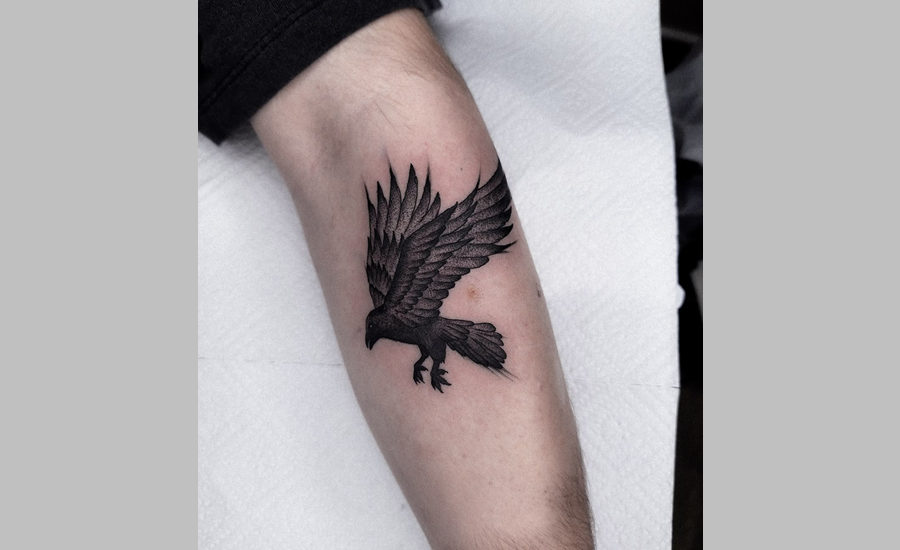
Image source: Pinterest
Ravens are one of the most visually striking choices in Viking-inspired tattooing. They feel intelligent, watchful, and a little haunting, which gives them a strong presence even in a simpler design.
In Norse mythology, ravens are closely associated with Odin, which is one reason they are often linked to wisdom, memory, thought, and awareness. Even outside mythology, though, ravens naturally suggest mystery and intelligence. That balance makes them especially appealing. They can feel dark without becoming cliché, and symbolic without looking overworked.
A raven tattoo can also shift in tone depending on the styling. A single perched raven can feel calm and observant. A flying raven with open wings feels sharper and more dramatic. Two ravens can create a more mythic, story-driven composition. For people who want a tattoo that feels meaningful and visually elegant at the same time, ravens are often one of the strongest choices.
Wolf Tattoos
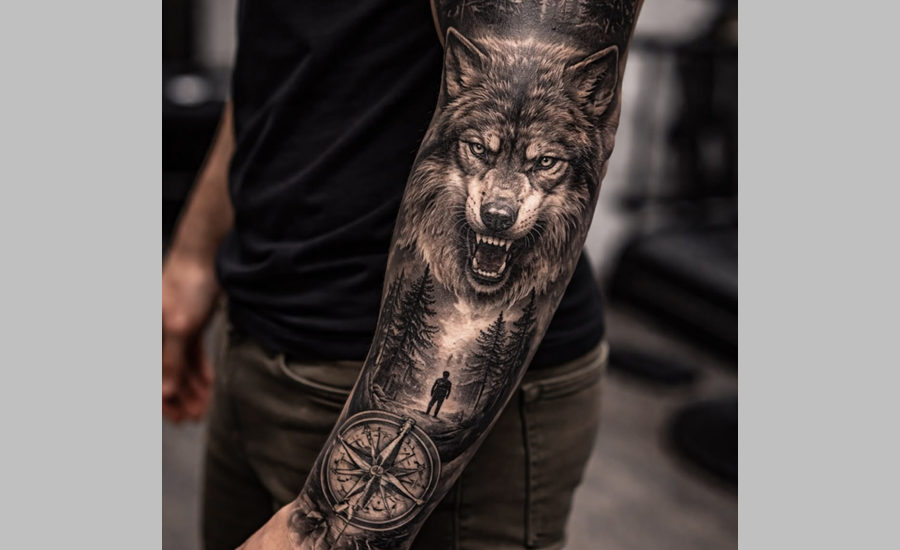
Image source: Pinterest
Wolf tattoos carry a more primal energy. They often appeal to people who want a design that feels fierce, instinctive, and emotionally charged. A wolf can symbolize loyalty, survival, protectiveness, independence, or danger, depending on how the design is built and what the wearer connects with most.
That range is part of why wolf tattoos remain so popular. A calm wolf staring forward can feel steady and self-possessed. A snarling wolf or a running wolf feels more aggressive and raw. Both directions work beautifully within Viking-inspired tattooing because the image already carries such strong natural tension.
Wolf tattoos also pair well with other Norse elements. They can be combined with runes, dark forests, moon imagery, knotwork-inspired borders, or larger mythological compositions. For someone who wants a tattoo that feels alive and intense, a wolf is often one of the most powerful options.
Thor’s Hammer Tattoos
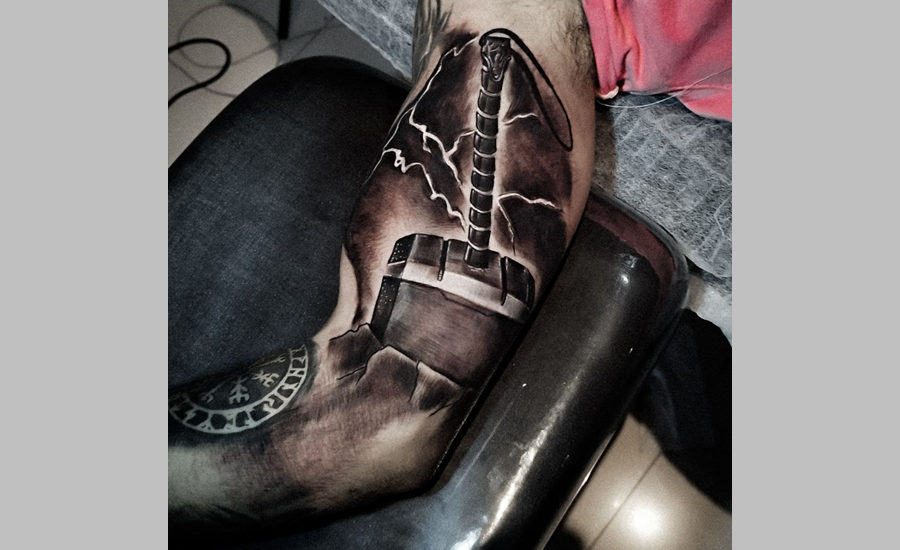
Image source: Pinterest
Thor’s hammer is one of the clearest and most recognizable Viking-inspired tattoo symbols. It has immediate visual impact and does not need much explanation. For many people, that directness is part of what makes it so appealing.
This design usually symbolizes strength, protection, and grounded power. It feels solid. It feels steady. And because the shape is so recognizable, it works well in both small and large formats.
A minimal version can sit cleanly on the forearm, calf, or upper arm. A larger version can become the centerpiece of a chest, shoulder, or sleeve design. Some people prefer a straightforward hammer with bold linework, while others want a more carved, weathered look that feels rougher and older. Both approaches can work beautifully.
For readers who want a Viking-inspired tattoo that feels unmistakable and confident, Thor’s hammer is often one of the strongest options.
Yggdrasil Tattoos
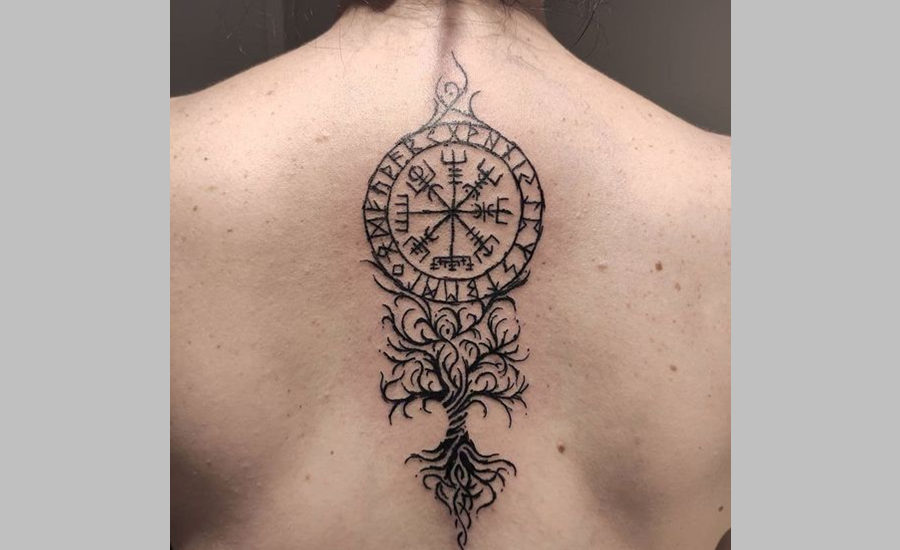
Image source: Pinterest
Yggdrasil tattoos tend to attract people who want something more layered and reflective. As the world tree in Norse mythology, Yggdrasil is often associated with connection, life, balance, and the structure holding everything together.
That makes it one of the most meaningful options in this style, especially for people who want depth without choosing a more aggressive symbol. A Yggdrasil tattoo can feel spiritual, grounded, and visually dramatic all at once.
It also works especially well in larger placements. The branching structure and roots give the design natural movement, which makes it a strong fit for the back, thigh, chest, or as the central image in a sleeve. Some versions are stark and black, with strong silhouette-like branches. Others are more detailed and layered, with roots, circular framing, or surrounding elements that make the piece feel immersive.
A well-designed Yggdrasil tattoo often has a quieter strength than some other Viking-inspired motifs, which is exactly why many people love it.
Viking Ship Tattoos
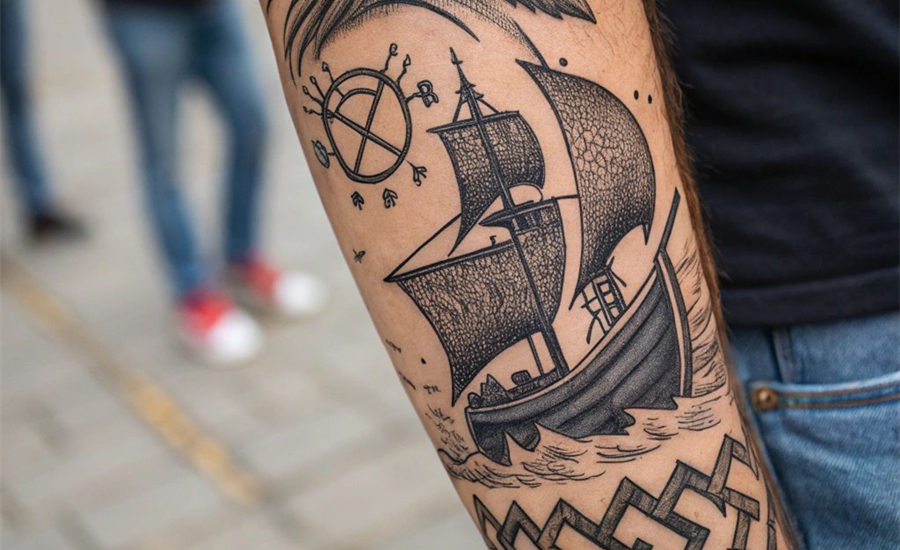
Image source: Pinterest
Viking ship tattoos are a strong choice for people drawn to ideas like travel, endurance, courage, and movement. There is something naturally compelling about a ship cutting through rough water. It feels active, determined, and full of direction.
This kind of tattoo can symbolize adventure, survival, resilience, or the willingness to move forward even in uncertain conditions. That makes it especially appealing for people who want a design that reflects their personal journey rather than just a static symbol.
Visually, Viking ships also offer a lot of room for storytelling. A simple ship silhouette can feel clean and classic. A more detailed design can include waves, storm clouds, ravens, carved prows, or other elements that make the piece feel more dramatic. It is one of the best choices for someone who wants a Viking-inspired tattoo with movement and atmosphere.
Norse-Inspired Sleeve Tattoos
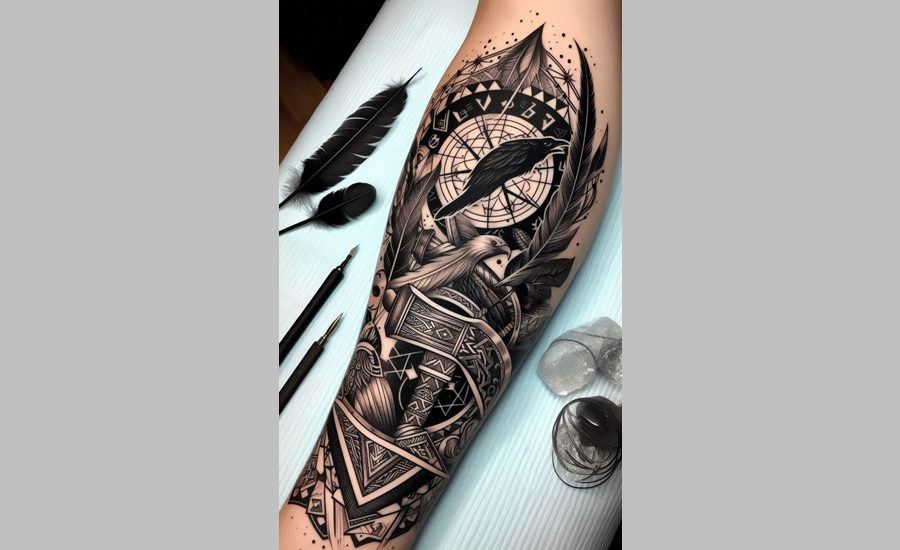
Image source: Pinterest
For people who want a larger, more immersive piece, a Norse-inspired sleeve offers the most creative freedom. A sleeve can combine multiple symbols into one connected design, allowing the tattoo to feel like a full visual world rather than a single isolated image.
That is also where careful design matters most. The strongest Viking-inspired sleeves usually have one main anchor image, such as a raven, hammer, wolf, ship, or Yggdrasil, and then build around it with complementary details. That structure keeps the piece cohesive and prevents it from feeling crowded.
When done well, a sleeve can feel incredibly atmospheric. Dark shading, bold blackwork, symbolic transitions, and thoughtfully placed open space all help create a design that feels layered and intentional. A good sleeve does not just show symbols. It creates mood, story, and rhythm across the arm.
For someone who truly loves the style, this is often the most rewarding option.
Final Thoughts on Traditional Viking Tattoos
Traditional Viking tattoos continue to resonate because they feel bold, meaningful, and timeless. But the most compelling way to approach them is with both imagination and honesty. These tattoos do not need exaggerated claims of perfect historical accuracy to be powerful.
The best Viking tattoo is not the one that tries hardest to impress people. It is the one that still feels solid, intentional, and deeply yours years later.